

Comments from Recently Appointed Probate & Family Court Chief Justice Brian J. Dunn
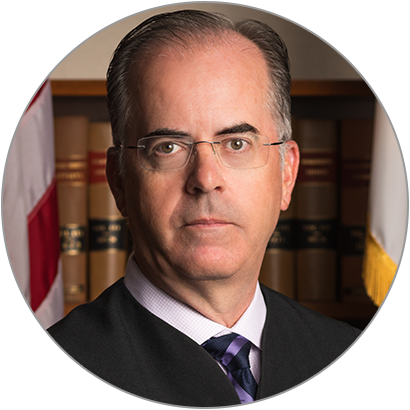 By The Honorable Brian J. Dunn
When taking on the position of Chief Justice of the Probate and Family Court in July 2025, I knew how crucial my role would be to the ongoing development of the court. I entered this position with many ideas that I planned to implement based on my own experience as a judge. Since my appointment, it has become clear that ideas for the improvement and evolution of the Probate and Family Court come in many forms and derive from a wide variety of sources, including judges, registers, staff, attorneys, litigants, and organizations. The input of people closely involved with and invested in the court is integral to a Probate and Family Court Department that has the capacity to evolve with time and experience.
As I have met with our First Justices and Registers and listened to their wants and needs, I am impressed with their focus on providing access to justice for our litigants and supporting our judges and staff to meet our mission of justice with dignity and speed.
In this article, I highlight projects that impact both “sides” of the Probate and Family Court— probate and domestic relations. Throughout my term, I will continue to examine existing projects and initiatives to assess whether changes could or should be made to enhance them, while also creating new initiatives as I find gaps in our ability to meet our mission. I am proud to be Chief Justice of the Probate and Family Court and look forward to working with all stakeholders to have a Probate and Family Court that allows us to address the needs of the citizens of the Commonwealth.
Office of Adult Guardianship and Conservatorship Oversight
The creation of the Office of Adult Guardianship and Conservatorship Oversight (OAGCO) is the end result of a multi-year Elder Justice Innovation Grant. It is also the beginning of an office within the Probate and Family Court devoted to the comprehensive tracking of cases and review of data relating to guardianships and conservatorships in Massachusetts, and support of guardians, conservators, and attorneys through the Ombudsman Service Program (OSP). Since February 2025, the OAGCO has operated under Probate and Family Court Standing Order 1-25.
As of June 2025, the Probate and Family Court had 29,314 active guardianship cases and 10,721 active conservatorship cases. In 2025 alone, more than 4,000 new guardianship and conservatorship cases have been filed across the Commonwealth. However, according to early data collection, fewer than 25 percent of the appointed guardians had timely filed the required Guardian Care Plan Report (GCPR), and fewer than 4 percent of appointed conservators were compliant with their reporting requirements.
The OAGCO has sent notices of non-compliance to 10,710 guardians and conservators who were past due with their requisite annual reporting. As a result of those notices and follow-ups to inquiries through the OSP, 48 percent of non-compliant cases became compliant.
We expect that the compliance rates will increase with time and awareness of the OAGCO. To assist with compliance, I have implemented a monthly Zoom hearing session for cases where guardians, despite being sent multiple notices of non-compliance, have failed to appear or file a GCPR.
The OAGCO has three avenues for communication: (1) the Ombudsman Service Program offers a monthly Zoom meeting, available to the bar and the public, to assist with questions about reporting requirements and relevant court procedures; (2) the OAGCO has a dedicated email account ([email protected]) to receive inquiries; and (3) the OAGCO’s webpage provides helpful resources, including forms, instruction booklets, and a series of training modules related to guardianship and conservatorship case types.
As of September 2025, the OAGCO has answered and/or provided helpful resources in response to over 260 emails and has assisted with numerous in-person Zoom inquiries from guardians, conservators, attorneys, and other members of the public; in addition, the webpage has been viewed over 4,600 times.
Guardianship: Helping Vulnerable Adults Explore Alternatives to Guardianship
In the fall of 2024, the Probate and Family Court was awarded a second Elder Justice Innovation Grant. This project, titled Guardianship: Helping Vulnerable Adults Explore Alternatives to Guardianship, will develop an adult guardianship diversion program using a multidisciplinary approach in collaboration with community partners.
The project will collaborate with the National Center for State Courts to develop a model for conducting community mapping – a process that brings together local stakeholders working with adults who may be vulnerable to being placed under guardianship. Community mapping has three objectives: (1) assessing the community’s existing resources that help individuals navigate guardianship and its alternatives; (2) identifying opportunities for improvements to these resources; and (3) developing action plans for improving current practices at the local level.
Two divisions of the Probate and Family Court will host community mapping events. The outcomes will be reviewed at a statewide Stakeholder Summit, expected to take place in late 2026. The goals of the project are that fewer adults will be under guardianship, more individual rights will be protected, and there will be an increase in public knowledge of alternatives to guardianship.
Pathways
The Pathways case management process that has been utilized in the Probate and Family Court for a number of years, continues to be adapted to the current needs of the Court, most recently by the implementation of Probate and Family Court Standing Order 2-25: Pathways Case Management System that became effective on April 11, 2025.
Pathways uses early intervention to connect court users with appropriate resources and offers broader dispute resolution options by setting cases on three different tracks, or “pathways.” The goal of Pathways is to promote timely and effective resolution so that parties can focus on cooperative problem solving instead of engaging in long, expensive litigation. The Pathways process utilizes court staff, such as Assistant Judicial Case Managers, to triage cases, initiate contact with parties and attorneys soon after service is accomplished, and hold virtual case management conferences for cases that are on the Pathways 1 track. The case management conference is scheduled between 30 and 45 days from the return of service being filed with the Court. Even if the Pathways 1 case management conference does not result in an agreement, valuable insight into the case is developed, which can ultimately help the Court resolve the matter. Under the Pathways 2 track, the case is referred for dispute intervention with the Probation department or a conciliation or mediation session. If the case is not resolved in either track 1 or 2, the case is scheduled into the Pathways 3 track with the assigned judge.
Until the implementation of Standing Order 2-25 in April 2025, the focus of Pathways was modification actions (actions where parties were looking to modify prior judgments). Now, divisions may expand the case types utilizing Pathways. For example, the Barnstable Division uses Pathways for all case types. In other divisions, if a modification and contempt have related issues, and it seems likely that the contempt could be dismissed if the parties resolve the modification, the matters will be scheduled together for a conference. Other divisions use Pathways to assist self-represented parties with uncomplicated uncontested divorces, but who have filed materials with deficiencies.
Child Support Guidelines
In June 2024, Chief Justice of the Trial Court Heidi E. Brieger appointed the 2024-2025 Child Support Guidelines Task Force to conduct the quadrennial review of the Massachusetts Child Support Guidelines (“guidelines”). During its review, the Task Force considered federal and Massachusetts statutory requirements, oral comments submitted at three virtual public forums, written comments submitted to the Trial Court email address established for public comments, survey results from judges and staff of the Probate and Family Court and the Massachusetts Probation Service, as well as comments from the experienced members of the Task Force. The Task Force reviewed deviation statistics, economic models and data, and information on child support from other states.
The Task Force submitted its recommendations in June 2025. The new guidelines and worksheet were announced on October 30, 2025 and are effective as of December 1, 2025.
These highlights from four of our department’s projects only touch on the expansive work performed by the Probate and Family Court. The next five years will be invigorating for everyone involved in the Probate and Family Court and I am honored to usher in the future of the Court.
Chief Justice Brian J. Dunn was appointed as an Associate Justice in the Probate & Family Court in 2013. He served for over seven years as First Justice in Suffolk County Division before he was designated as Chief Justice of the Probate and Family Court Department in July of 2025.


