2026 Spirit of the Bar Celebrates Service, Second Chances, and the Rule of Law
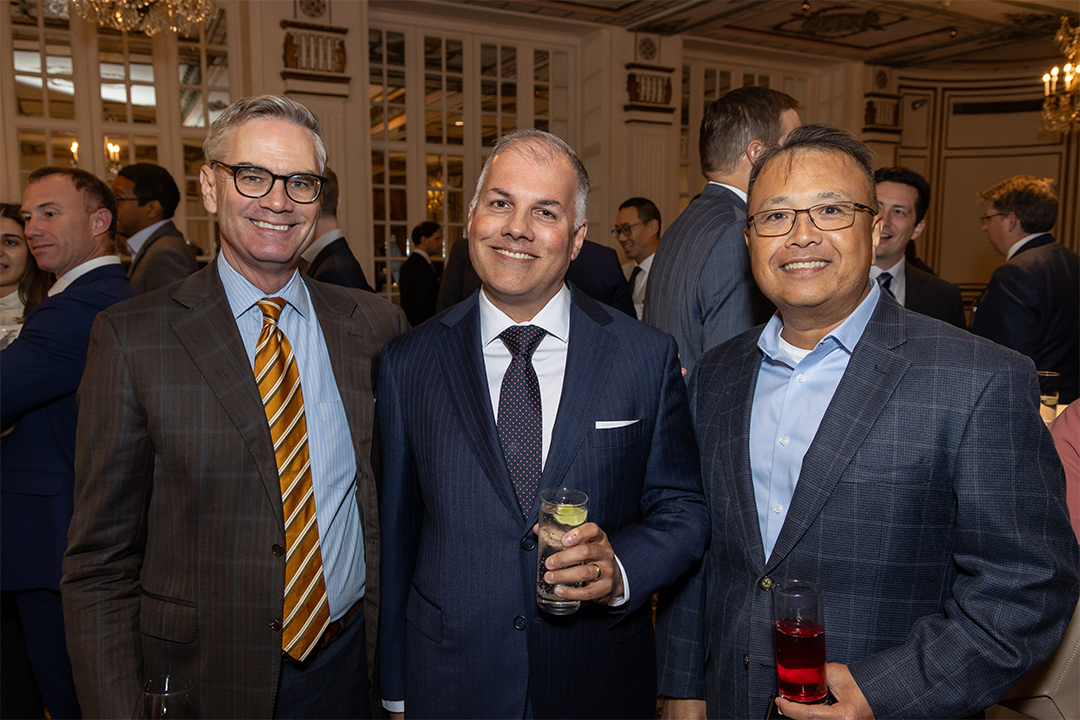
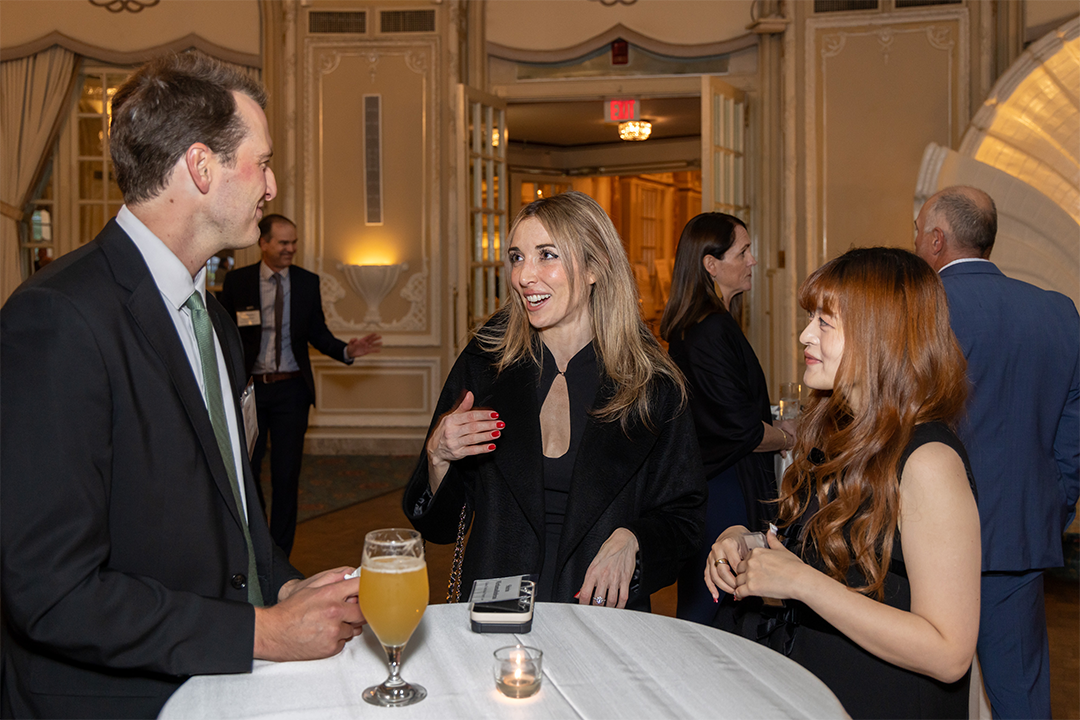
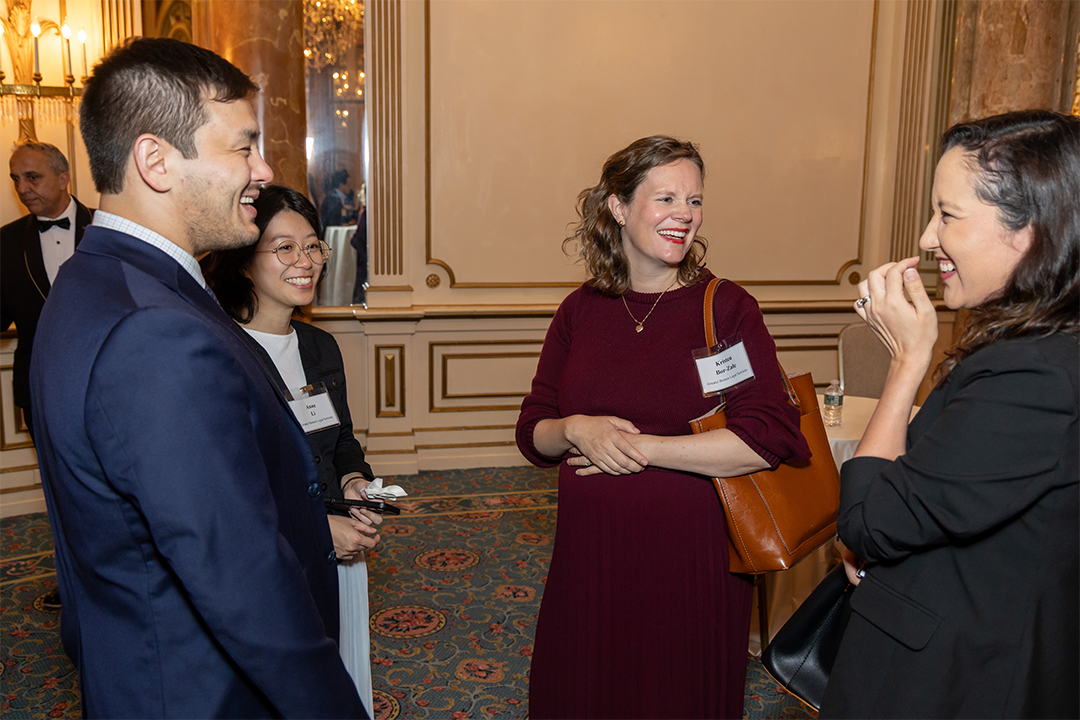
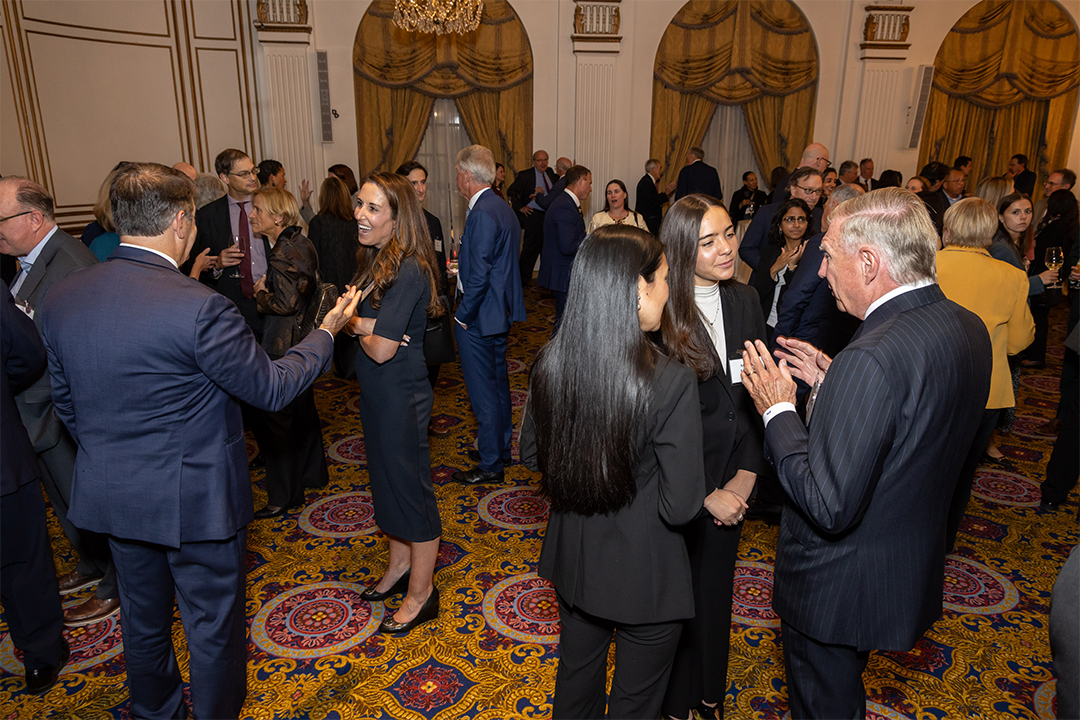
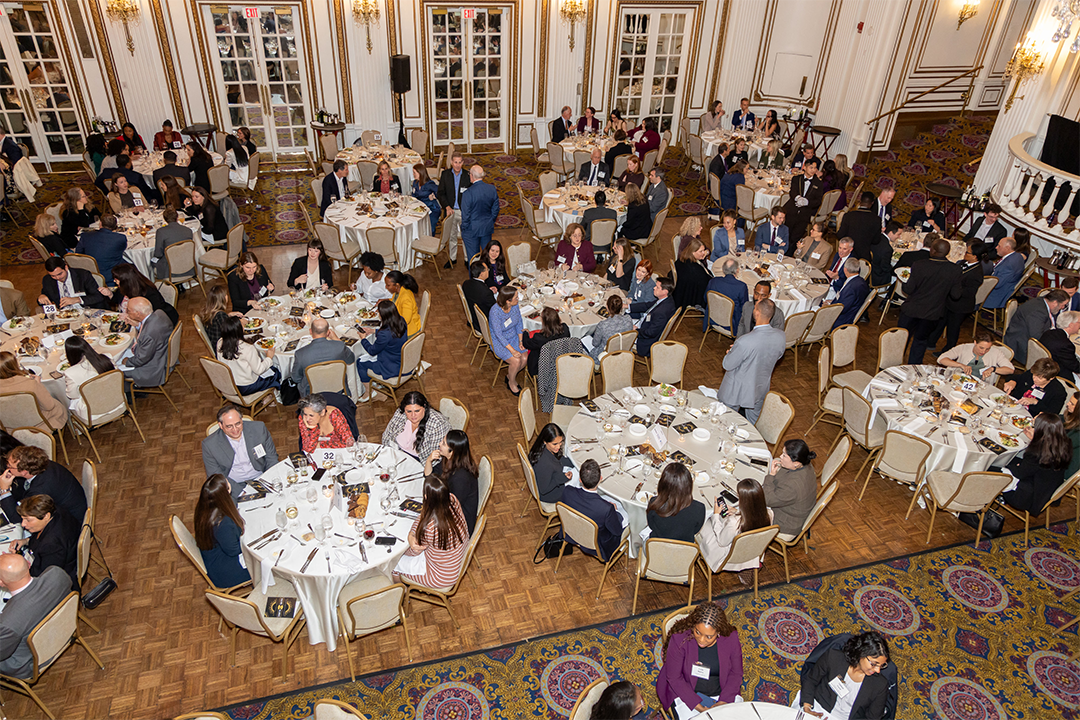
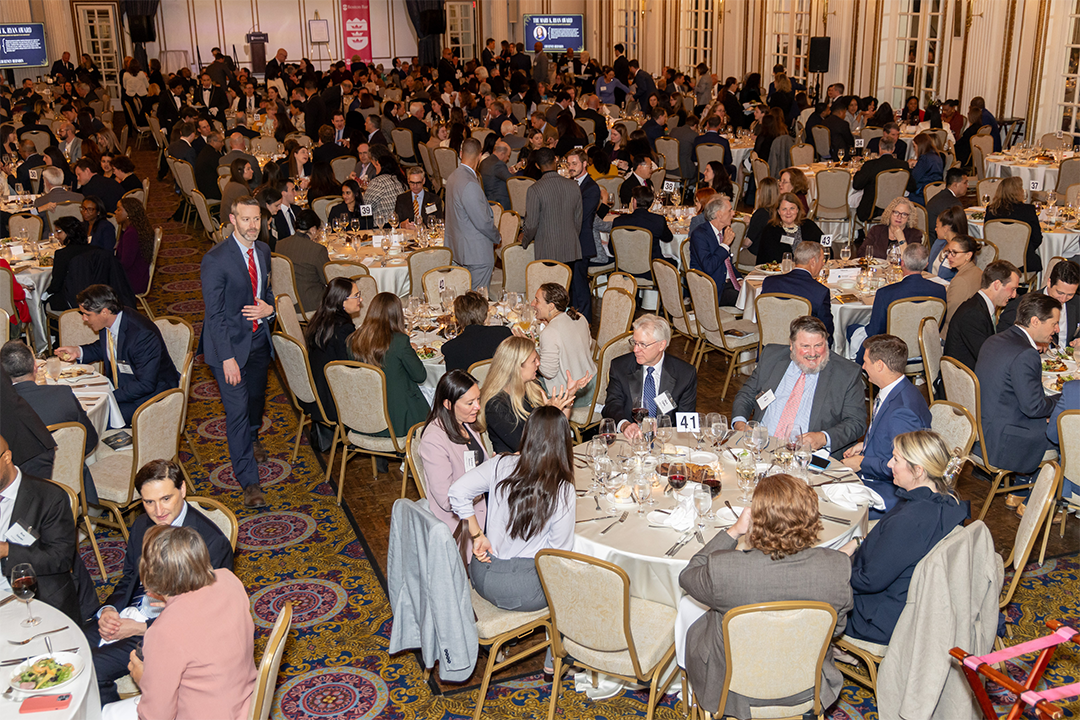
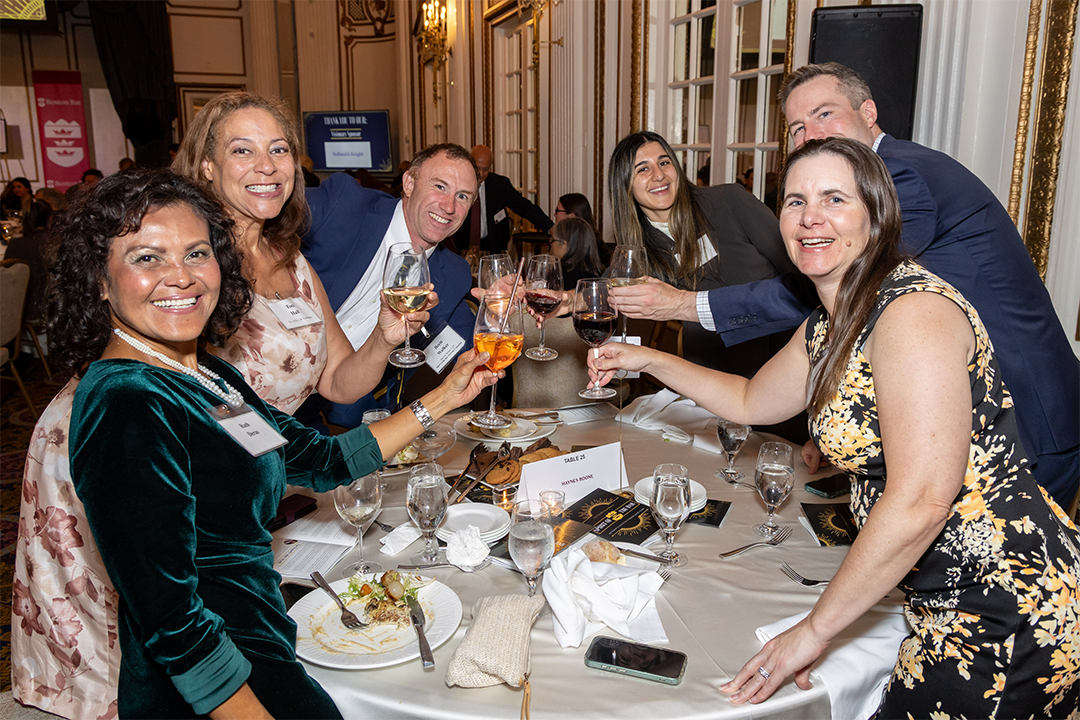
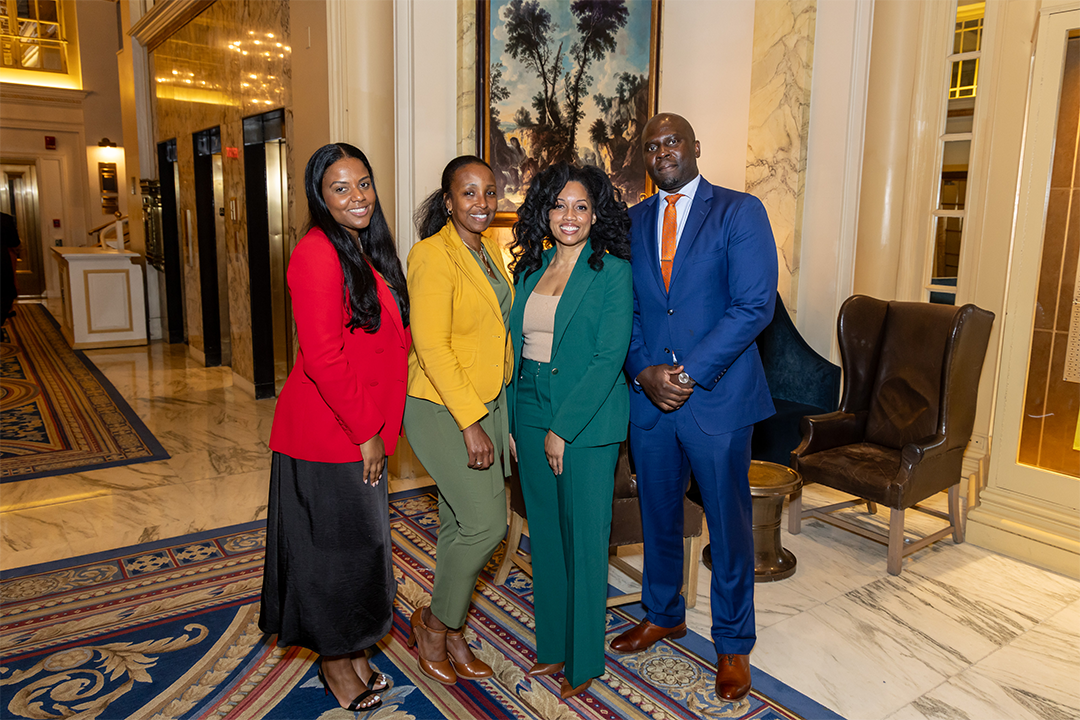
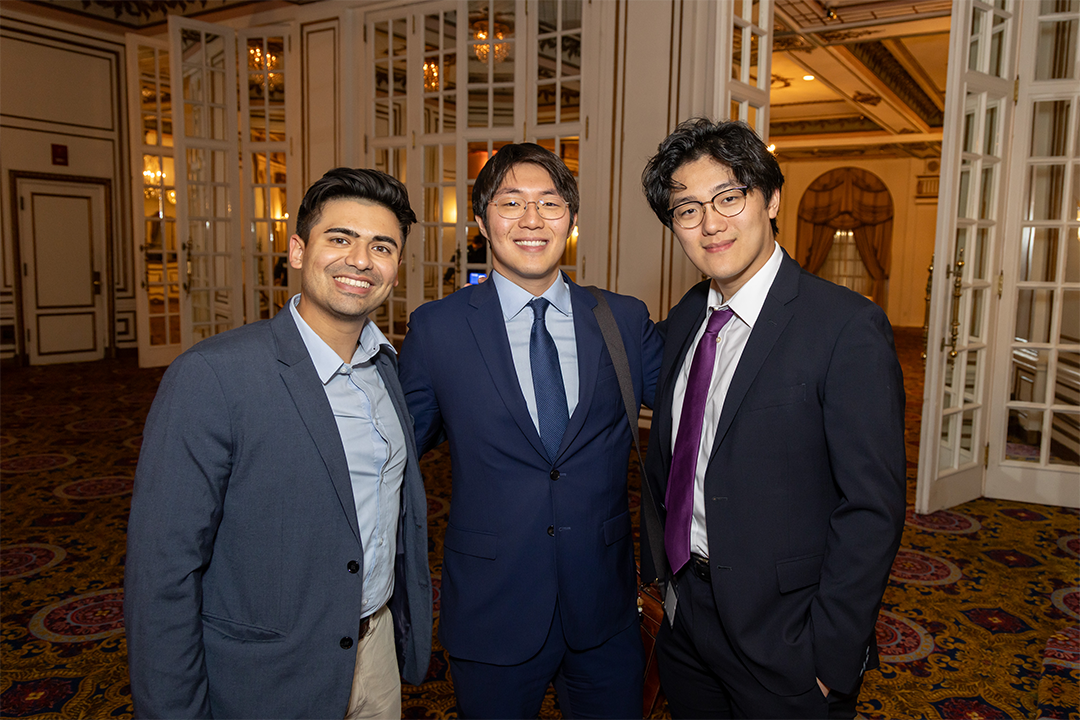
Article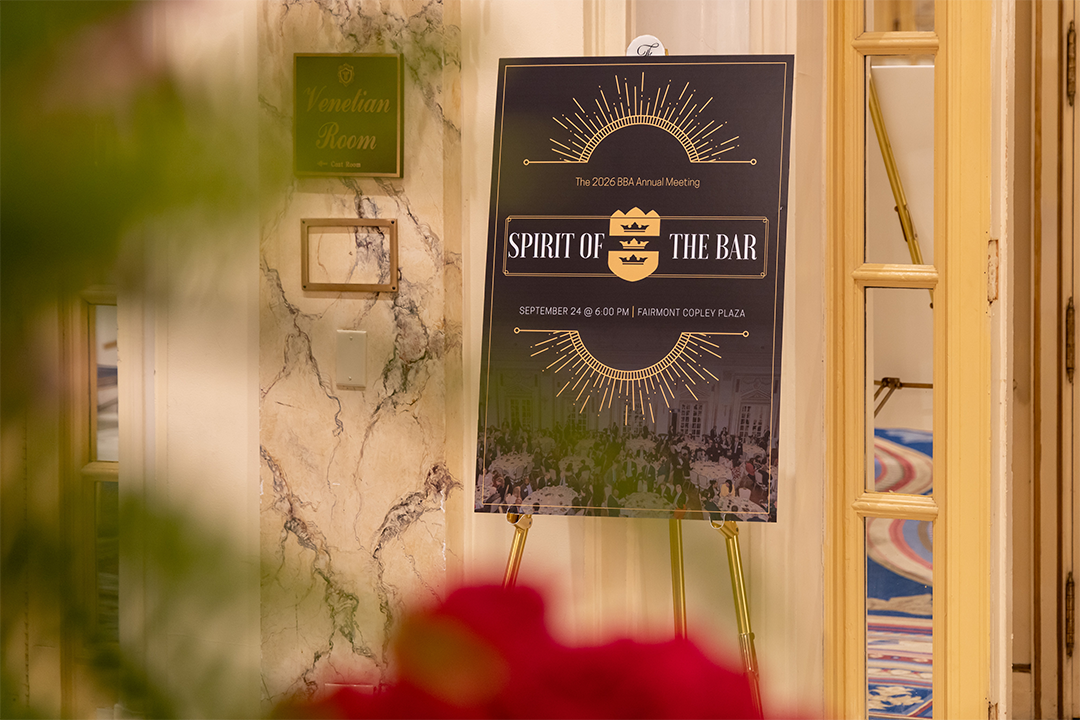 Members of Boston’s legal community gathered at the Fairmont Copley Plaza on Sept. 24 for the Boston Bar Association’s 2026 Spirit of the Bar, an evening honoring lawyers, organizations, and leaders whose contributions reflect a deep commitment to others and to the profession.
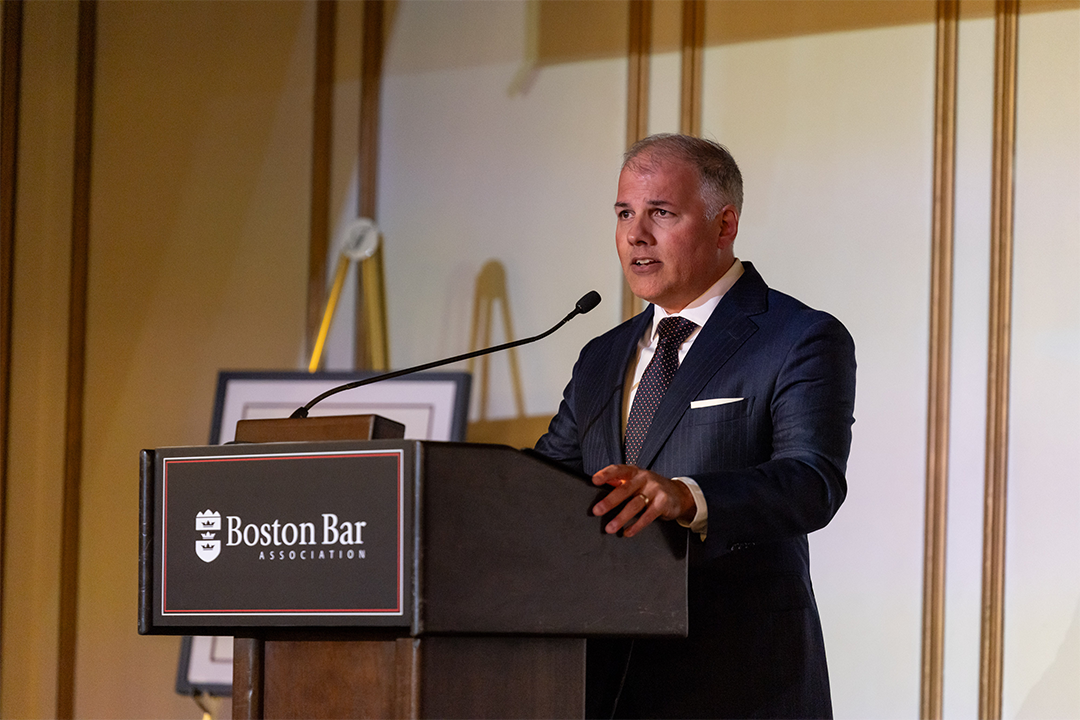
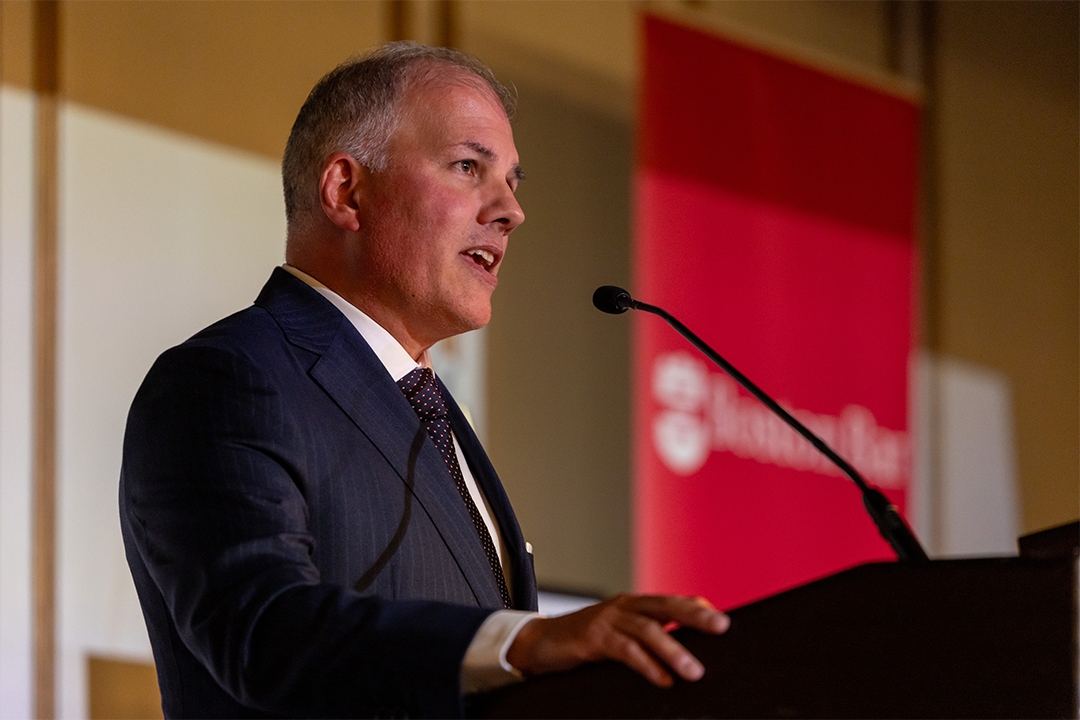
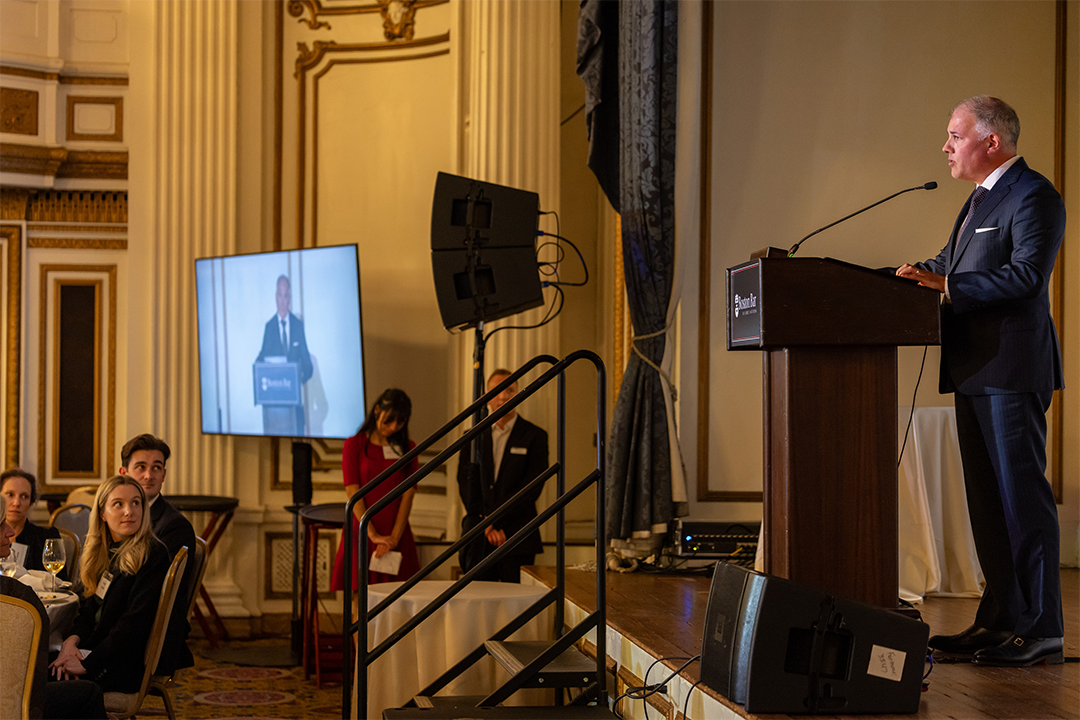
Opening the program, BBA President Mark C. Fleming posed a question that carried through the evening: “How can I use what I have to do good?” The answers ranged from an in-house law department building a strong pro bono culture to a court removing barriers for people experiencing homelessness, individual attorneys making room in their practices to represent those in need, and a retired Supreme Court justice reflecting on lawyers’ responsibility to uphold the rule of law.
A Culture of Pro Bono Service
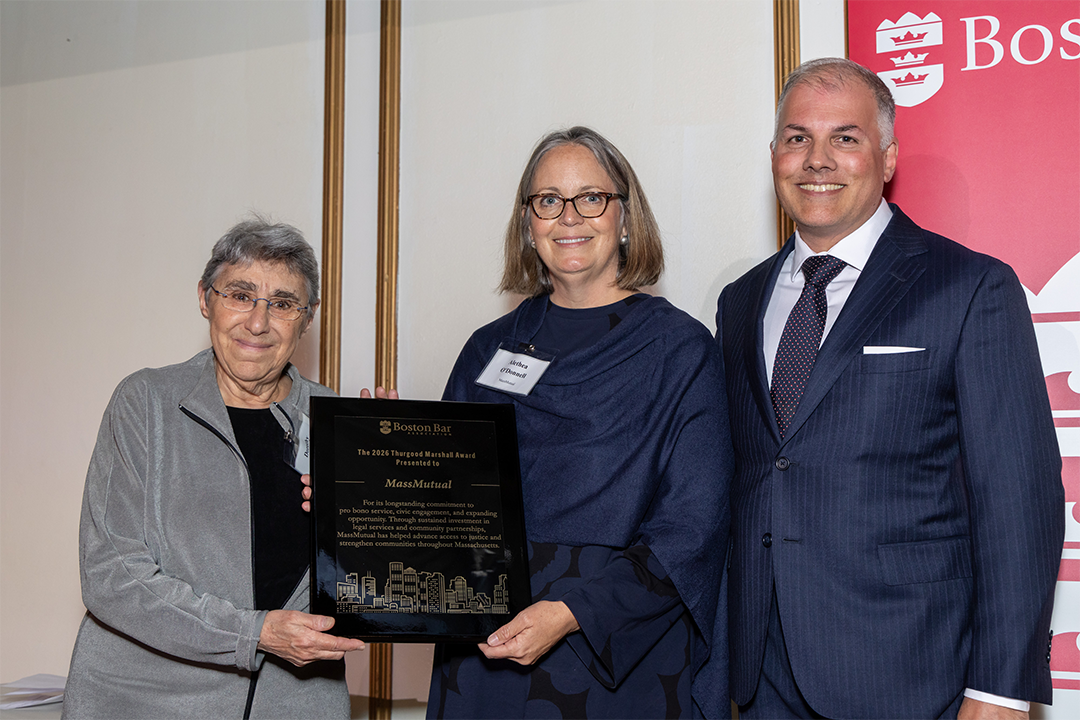 The BBA presented the Thurgood Marshall Award to MassMutual for its longstanding commitment to pro bono representation.
For nearly two decades, MassMutual attorneys and other legal professionals have volunteered with organizations serving people facing a wide range of challenges. Their efforts have included assisting consumers with debt proceedings, helping people seal criminal records, representing asylum seekers, supporting veterans seeking military discharge upgrades, and answering civil legal questions through Mass Legal Answers Online.
Among those matters was the case of a tenant whose landlord removed the stove from his apartment in an attempt to force him out. After receiving guidance from a MassMutual volunteer attorney about his rights and what to include in a letter to the landlord, the stove was returned while he searched for a new home.
Alethea O’Donnell, Head of Corporate Compliance, Ethics & Sustainability, and Dorothy Varon, Lead Counsel, Corporate Law, accepted the award on behalf of MassMutual, reflecting on the company’s pro bono program and thanking the BBA for the recognition.
A Court of Second Chances
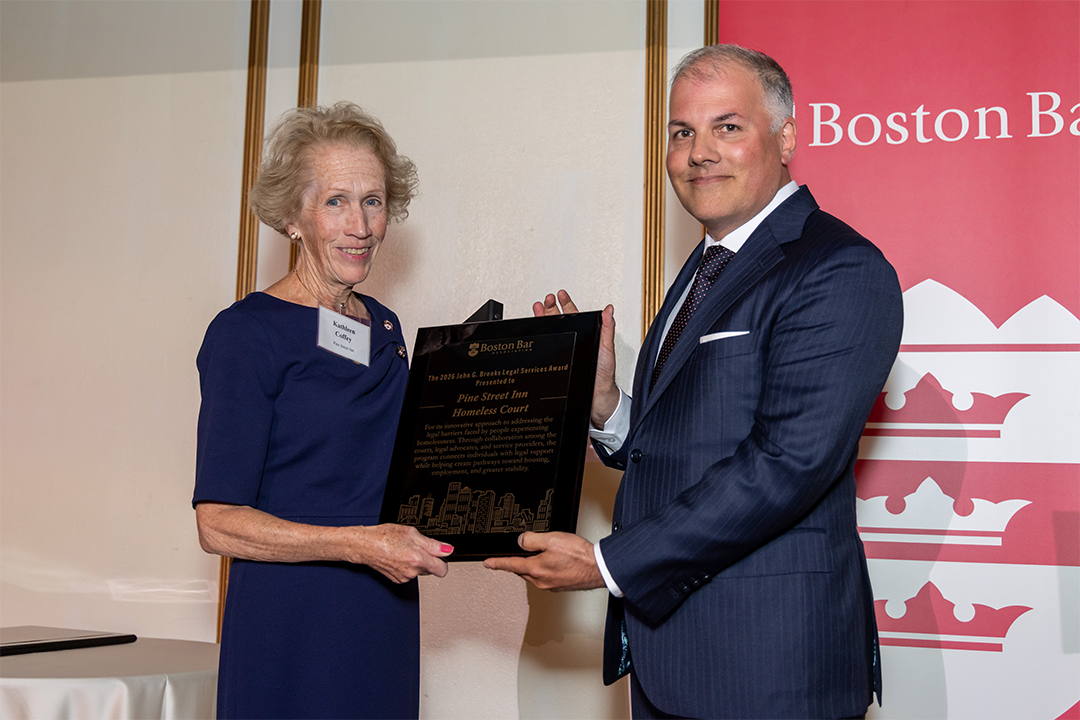 The John G. Brooks Legal Services Award was presented to Pine Street Inn’s Homeless Court for addressing issues that can stand between people experiencing homelessness and greater stability.
The first program of its kind in New England, Homeless Court brings together Pine Street Inn, the Boston Municipal Court’s West Roxbury Division, the Suffolk County District Attorney’s Office, and the Committee for Public Counsel Services. It gives eligible participants a way to resolve warrants and nonviolent criminal matters that can otherwise prevent them from securing housing, employment, a driver’s license, or public assistance.
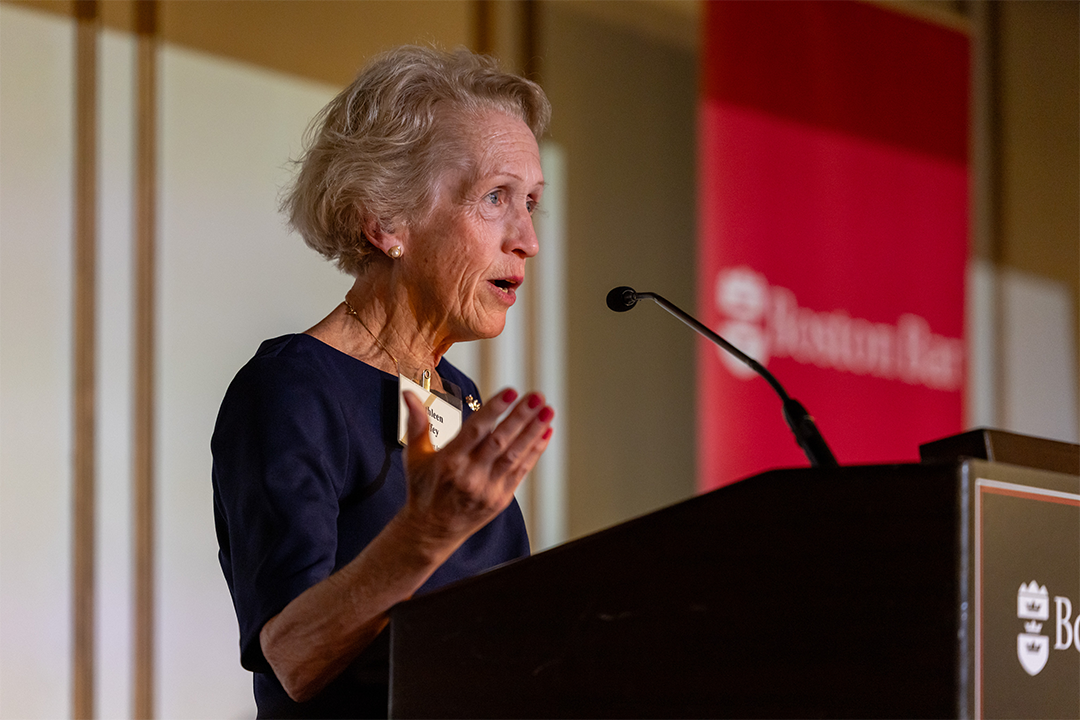
Retired Judge Kathleen Coffey, the court’s founder and longtime presiding judge, shared stories illustrating how seemingly small legal matters can have significant consequences. She recalled one person whose path to housing was blocked by a minor outstanding fine and another woman who sang during an appearance in a moment that left few dry eyes in the courtroom.
Coffey described Homeless Court as the “court of second chances,” reflecting its focus on people who have already taken meaningful steps toward recovery and stability and need an old legal matter cleared from their path.
Honoring Extraordinary Pro Bono Commitment
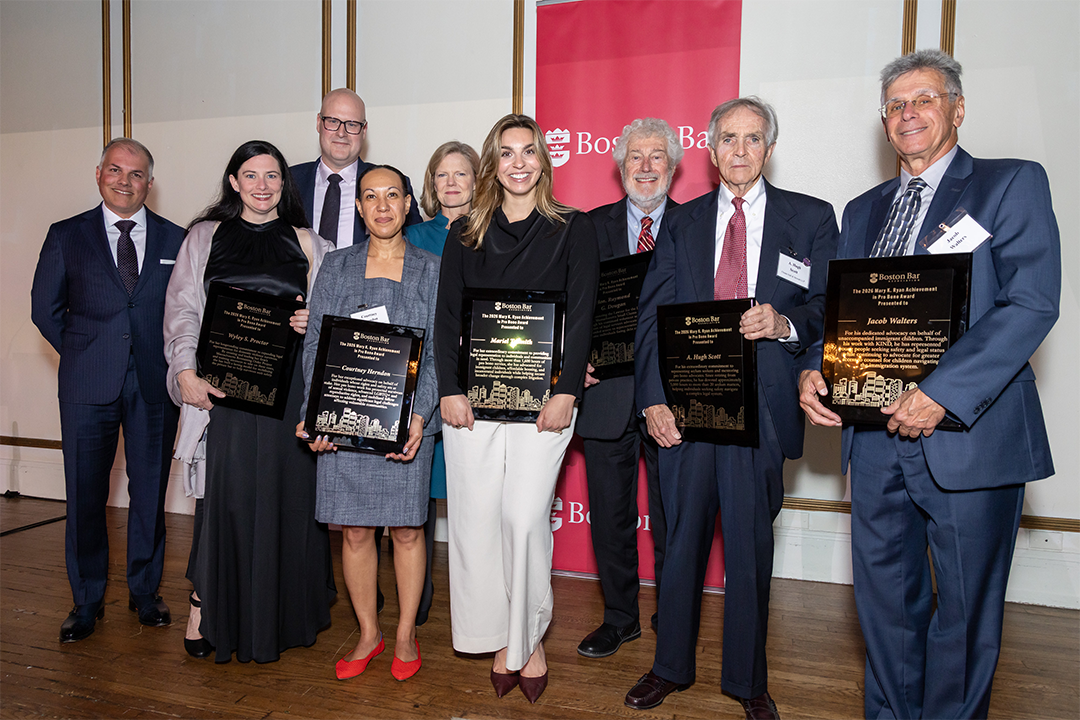 Spirit of the Bar also recognized eight attorneys with the Mary K. Ryan Achievement in Pro Bono Award: A. Hugh Scott, Jacob Walters, Hon. Raymond G. Dougan (Ret.), Cynthia D. Vreeland, Courtney Herndon, Mariel T. Smith, Kevin J. DeJong, and Wyley S. Proctor.
Their efforts have helped asylum seekers and unaccompanied children pursue safety, expanded representation for low-income consumers and survivors of domestic violence, strengthened protections for trafficking survivors, and advanced access to justice through litigation and advocacy.
Introducing the honorees, Fleming noted that there is no single model for pro bono commitment. What connects them is the decision to make room for it alongside the many other demands of a legal career and to use their expertise on behalf of people who might otherwise face the system alone.
Justice Breyer on Lawyers, the Law, and Civic Life
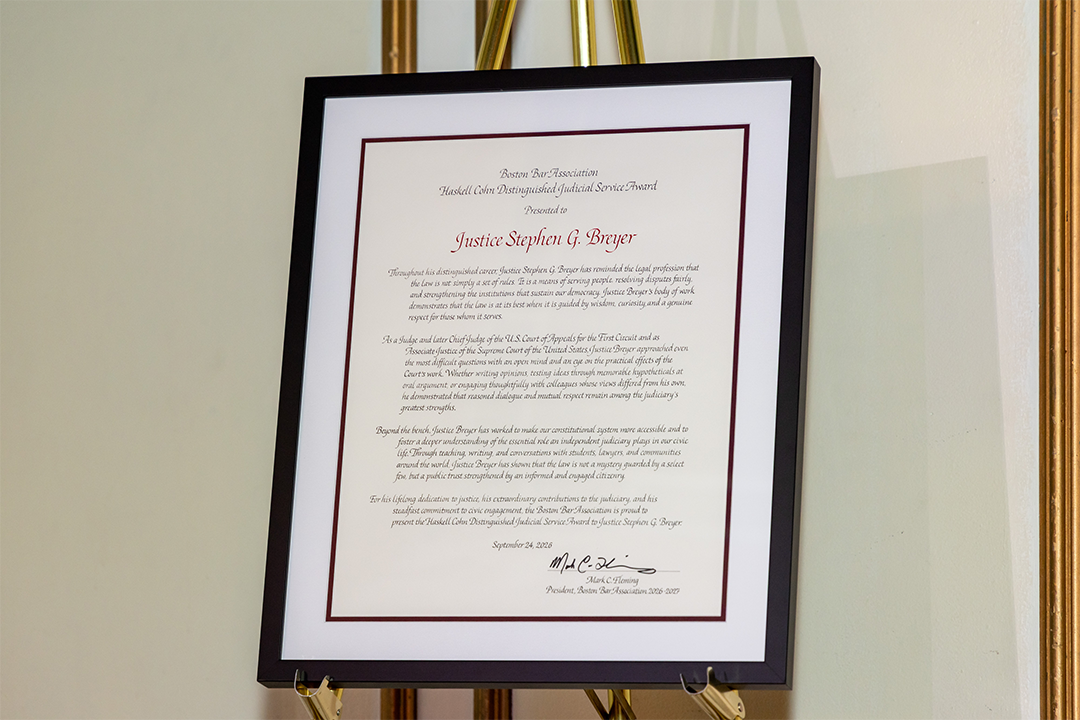
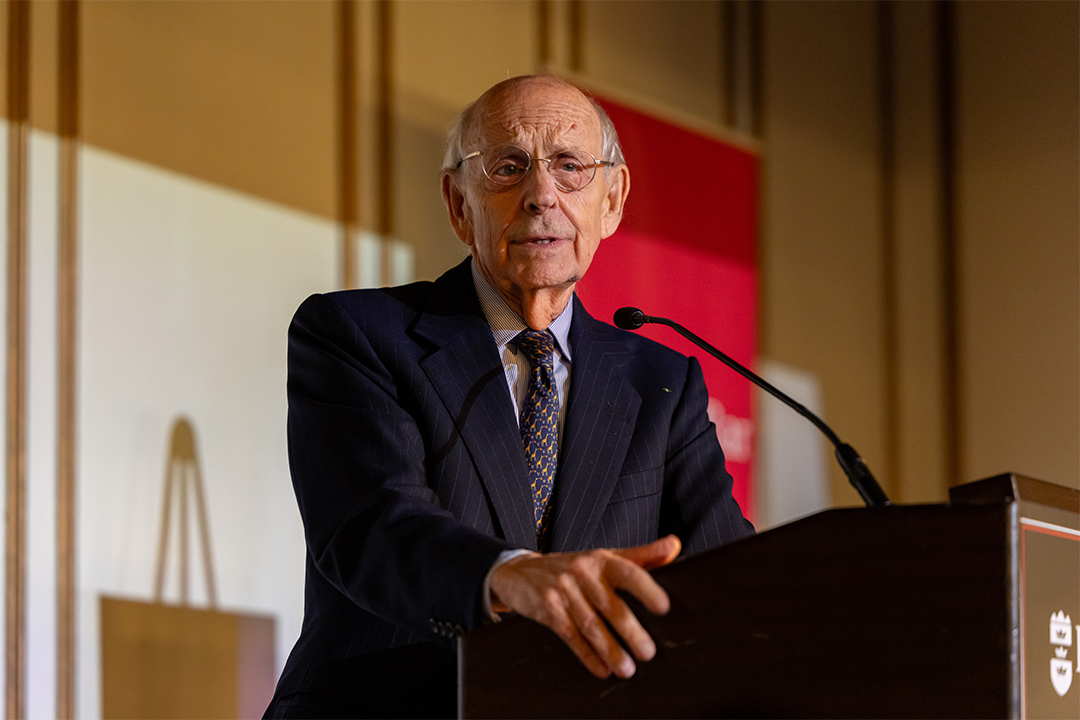
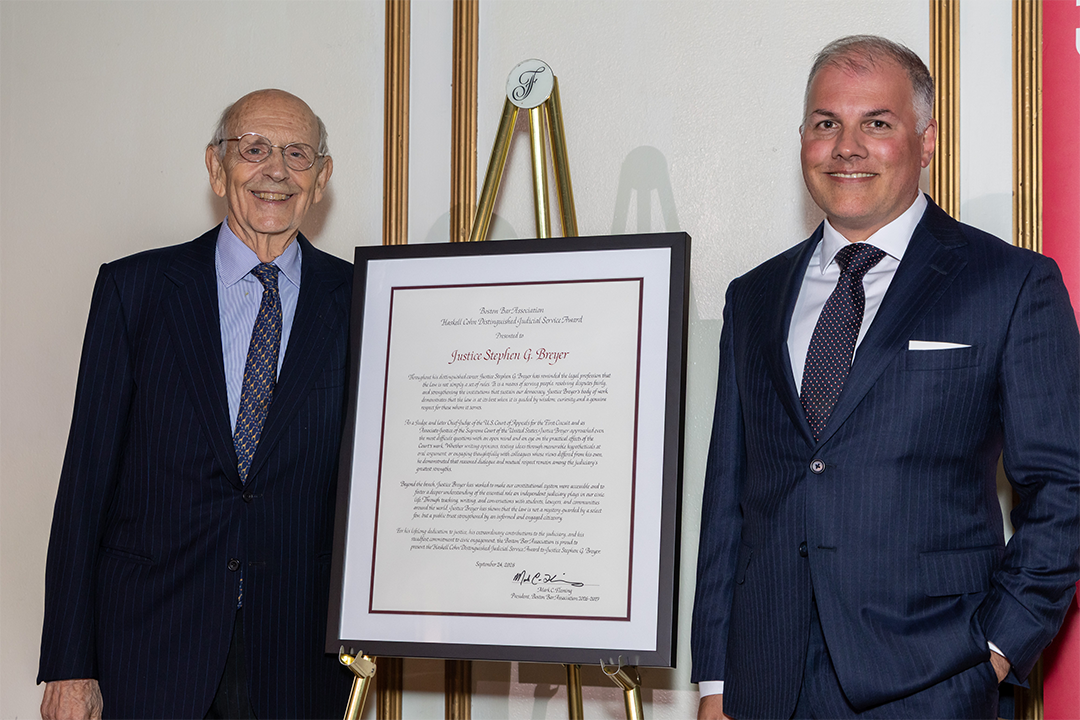
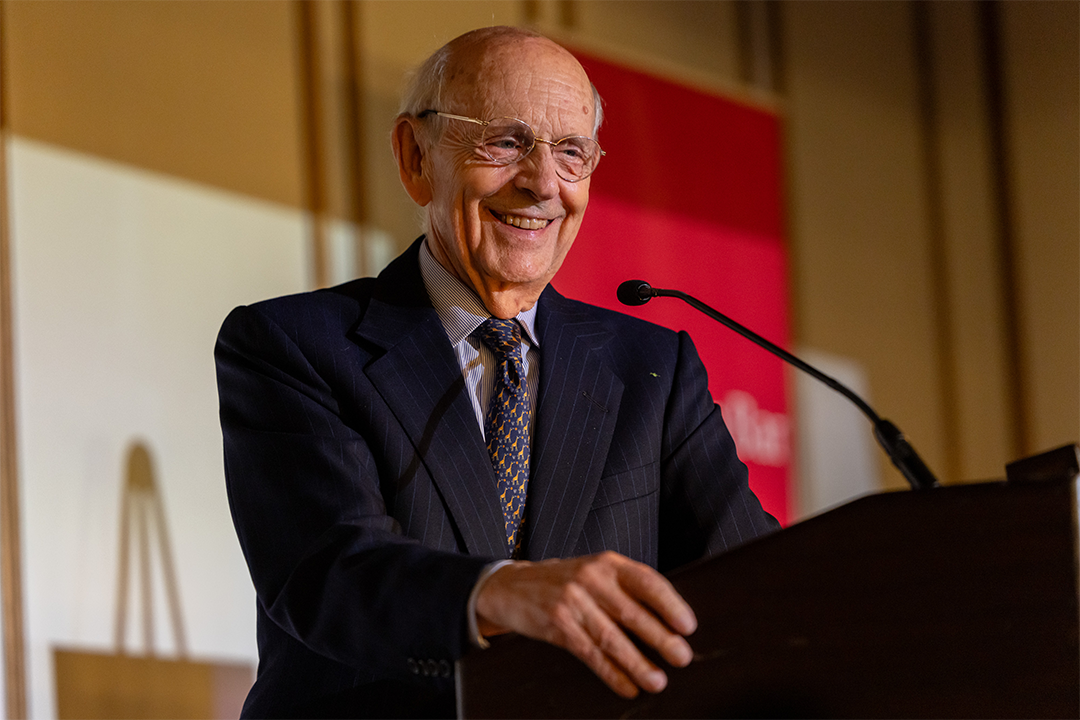 The evening concluded with the presentation of the Haskell Cohn Award for Distinguished Judicial Service to Justice Stephen G. Breyer, recognizing his decades of public service, judicial leadership, and contributions to the administration of justice.
Before his nearly 28 years on the Supreme Court of the United States, Justice Breyer served for 14 years on the U.S. Court of Appeals for the First Circuit, including four years as Chief Judge, and has taught generations of students at Harvard Law School and the Kennedy School of Government.
In introducing Justice Breyer, Fleming recalled appearing before him as an advocate and described the justice’s combination of intellectual curiosity, humor, and concern with practical consequences. He portrayed a jurist interested not only in what the law required on paper, but whether an answer would work for courts, institutions, and the people affected by it.
In accepting the award, Justice Breyer reflected on changes he has witnessed within the profession and the opportunities that opened over time to people who once faced significant barriers to participation. He also spoke about the role lawyers can play in strengthening public understanding of the law and the institutions that support it.
Drawing on American history and his experience on the Supreme Court, Justice Breyer discussed the importance of resolving disagreements through the legal system, including when people strongly disagree with the outcome. He emphasized that maintaining that tradition depends not only on judges and courts, but also on public understanding and confidence in how the system works.
Justice Breyer encouraged lawyers to help explain what courts do, why legal institutions matter, and how government works. He also pointed to civic education as an area where members of the profession can contribute beyond their day-to-day practice.
Fleming returned to his opening question as the program came to a close, pointing to the night’s honorees as examples of the many ways members of the profession can use what they have to do good. “The strength of our profession depends on the choices we make about what kind of lawyers we want to be, what kind of colleagues we want to be, and what kind of legal community we want Boston to be.”
Photo Gallery Preview